
Vestibular Rehabilitation
Regain Your Balance and Confidence.
A science-based, exercise-driven program that retrains the brain to process signals from the inner ear, vision, and proprioception — so everyday movement feels steady and safe again.
3
Clinic Locations
1:1
Personalized Care
Virtual
Available in Ontario
What to Expect
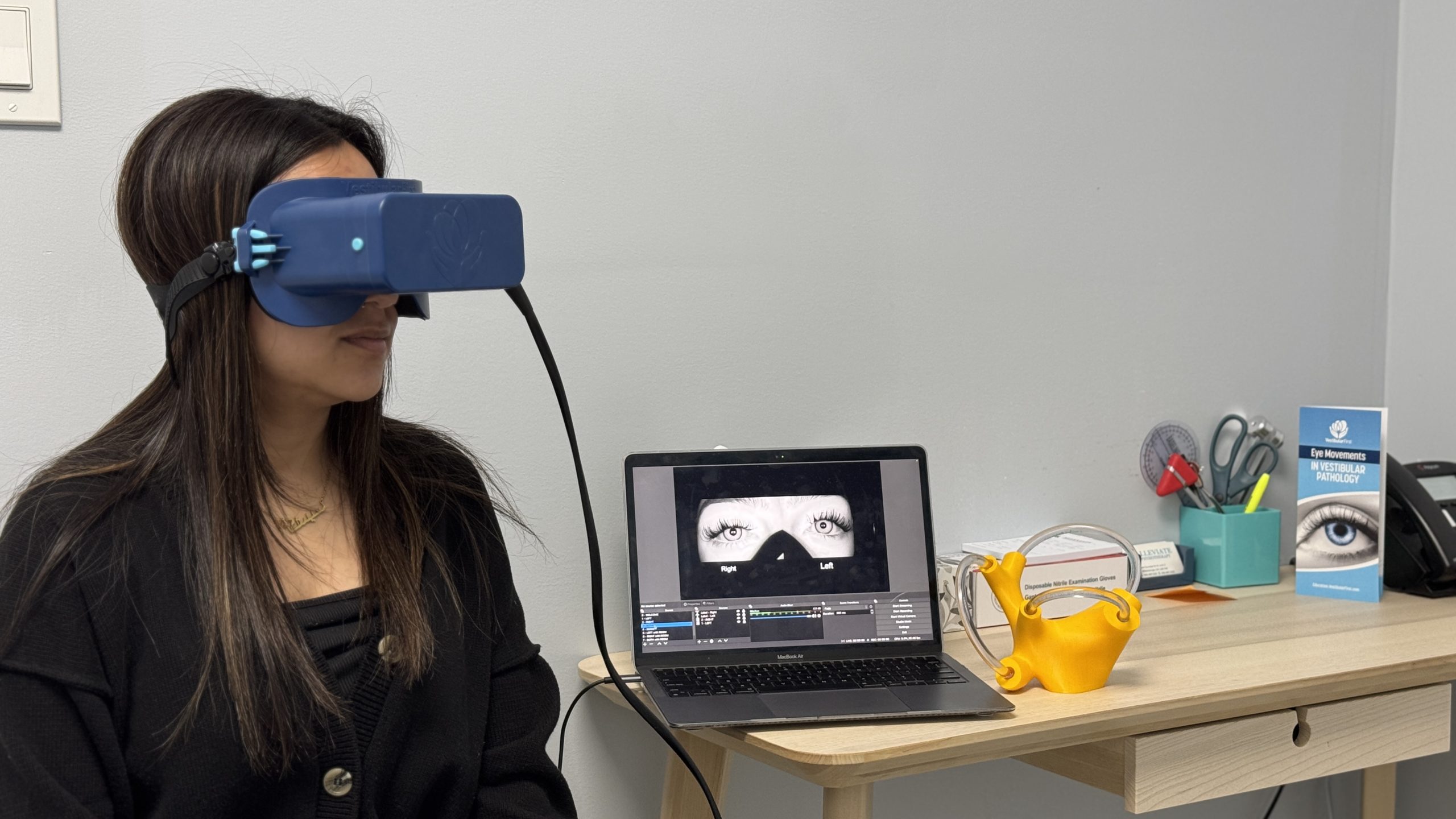
Detailed Vestibular Assessment
Eye movement & positional testing
Customized Treatment Plan
Matched to your specific findings
Home Exercise Progression
Continue recovery between sessions
Epley & Repositioning Maneuvers
When clinically indicated
Available at all three locations — and virtually across Ontario
Mississauga
Etobicoke
Clarkson GO
Virtual — Ontario
Understanding the Program
What is Vestibular Rehabilitation?
Your vestibular system — housed in the inner ear — plays a central role in balance and spatial awareness. When affected by injury, infection, concussion, migraine, aging, or nerve dysfunction, it can send conflicting signals to the brain, leading to dizziness, imbalance, and disorientation.
Vestibular Rehabilitation Therapy (VRT) is a focused, evidence-informed program designed to help the brain adapt, compensate, and stabilize. Through progressive movement-based exercises, VRT retrains the brain-body connection so daily activity feels predictable and confident again.
Untreated vestibular dysfunction can contribute to fatigue, nausea, anxiety, fear of movement, and reduced independence. Targeted treatment addresses the root cause — not just the symptoms.
Gaze Stabilization
Habituation Training
Balance Retraining
Positional Testing
Epley Maneuver
Home Exercise Progression
Habituation Training
Balance Retraining
Positional Testing
Epley Maneuver
Home Exercise Progression
Conditions We Treat
Comprehensive Care for Dizziness,
Vertigo & Vestibular Dysfunction
Patients describe vestibular symptoms in many different ways, so a clear assessment matters. Our therapists provide care for common vestibular and dizziness-related conditions that interfere with work, sport, sleep, and everyday activity.
Benign Paroxysmal Positional Vertigo (BPPV)
Sudden spinning episodes triggered by head position changes — often rolling in bed, looking up, or bending forward. One of the most common and treatable causes of vertigo.
Vestibular Neuritis
Inflammation of the vestibular nerve causing intense dizziness, imbalance, nausea, and difficulty with head movement — often following a viral illness.
Vestibular Migraine
Dizziness, motion sensitivity, visual disturbance, and vertigo linked with migraine history — even when head pain is not the dominant symptom.
Concussion & Traumatic Brain Injury
Dizziness, visual instability, spatial disorientation, and activity intolerance following a concussion, sports injury, or accident.
Cervicogenic Dizziness
Balance problems and dizziness related to neck joint dysfunction, stiffness, pain, and altered cervical proprioceptive input to the balance system.
Vestibular Hypofunction
Reduced function in one or both inner ears leading to persistent imbalance, gaze instability, and difficulty moving confidently in daily life.
The Program
How Vestibular Rehabilitation Works
Care is built around the way you move, the symptoms you experience, and the triggers that challenge your balance, vision, and orientation.
01
Comprehensive Initial Assessment
Eye-movement testing, video-based observation, positional screening, and balance analysis to accurately identify the affected system and root cause.
02
Personalized Treatment Plan
Interventions are matched to your specific findings — including repositioning maneuvers, gaze stabilization exercises, and functional balance work.
03
Progressive Rehabilitation
Each visit builds on the last, gradually increasing challenge to promote central nervous system compensation and confidence in movement.
04
Home Exercise Program
Guided exercises to continue recovery between clinic visits, reinforcing the brain-body adaptations being built during treatment.
Gaze Stabilization
Exercises that train the vestibulo-ocular reflex to keep vision clear during head movement.
Habituation Training
Controlled, repeated exposure to movements that provoke symptoms, reducing sensitivity over time.
Balance Retraining
Progressive exercises targeting postural control, stability, and confidence in standing, walking, and community mobility.
Epley Maneuver
A proven canalith repositioning procedure used for BPPV, performed when clinically indicated.
Positional Testing
Diagnostic maneuvers including Dix-Hallpike and roll tests to identify specific canal involvement.
Functional Return
Goal-directed activities focused on returning to driving, sport, work, and daily independence.
Goals of Treatment
Benefits That Go
Beyond Symptom Relief
The aim of vestibular physiotherapy is not only to reduce dizziness, but to rebuild confidence, improve function, and make everyday movement feel predictable again.
01
Decrease Disequilibrium
Reduce the constant sense of unsteadiness or being off-balance during walking, turning, and everyday tasks.
02
Eliminate Oscillopsia
Improve visual stability so the world does not feel like it is jumping, blurring, or lagging when your head moves.
03
Reduce Fall Risk
Improve functional balance, postural control, and stability with standing, walking, and community mobility.
04
Restore Independence
Support a confident return to driving, sports, exercise, professional work, and everyday routines you value.
05
Reverse Deconditioning
Rebuild general physical conditioning and confidence by reducing fear of movement and avoidance behaviors.
06
Improve Quality of Life
Help daily activities feel safer, less tiring, and more manageable by targeting both primary and secondary effects of dizziness.
Why Alleviate
Advanced Assessment.
Customized Treatment. Flexible Access.
01
Advanced Certified Therapists
Our clinicians are highly trained in vestibular rehabilitation and concussion management, guiding safe, progressive recovery through every stage.
02
Evidence-Based Assessment
Assessment may include eye-movement testing, video-based observation, positional screening, and balance analysis to identify the affected system precisely.
03
Customized Treatment Plans
Interventions are matched to your findings and may include repositioning maneuvers, gaze stabilization, habituation, and functional balance work — never a generic protocol.
04
Flexible Access Across Ontario
Care is available in person at Mississauga, Etobicoke, and Clarkson GO, with virtual physiotherapy options for patients anywhere in Ontario.
Don't Let Dizziness Control Your Life.
Our individualized approach is designed to help you recover, move with confidence, and return to the activities you love.
Ready to Regain Your Balance?
Book a comprehensive vestibular evaluation today and get a personalized path to recovery — in person or virtually across Ontario.


