
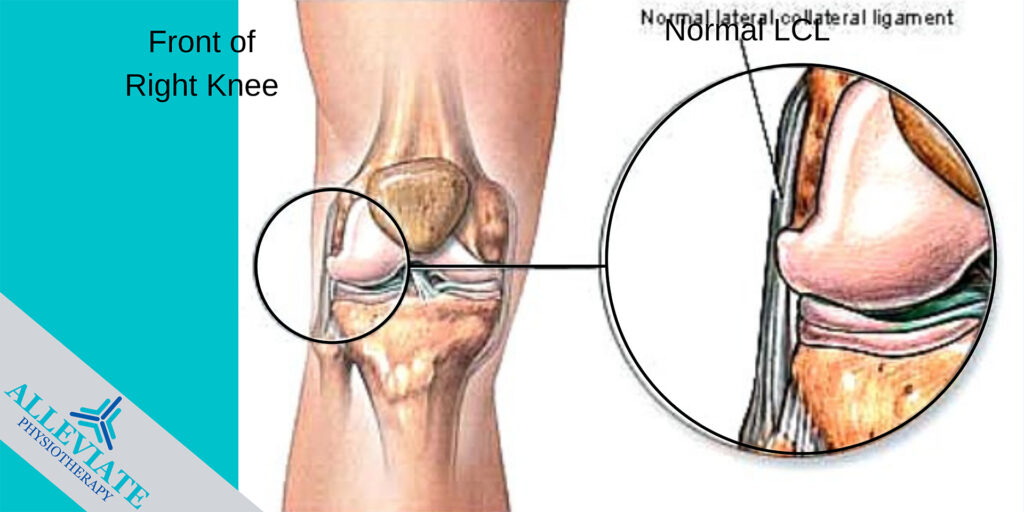
LCL Injury
Having a bad knee? It could be one of your ligaments. Come visit Alleviate Physiotherapy at Clarkson ( Oakville), Mississauga and Etobicoke for a quick free assessment.
Physiotherapy is the first line of defense against worsening of injury or injury prevention. Sports physiotherapy is one of the key components at Alleviate Physiotherapy. Read more about Knee Pain.
What is LCL Injury?
An LCL injury refers to an injury to the lateral collateral ligament (LCL), which is a band of tissue located on the outside of the knee joint.
The LCL connects the thigh bone (femur) to the smaller bone in the lower leg (fibula) and provides stability to the outer side of the knee.
Similar to an MCL injury, an LCL injury commonly occurs due to a direct blow to the inside of the knee or excessive stress placed on the outside of the knee joint.
The most frequent causes include sports-related activities, such as sudden twisting or impact to the inner knee during contact sports like football or soccer.
However, LCL injuries are generally less common than MCL injuries.
The severity of an LCL injury can range from mild sprains to complete tears, and they are often classified into three grades:
- Grade 1: A mild LCL sprain involving minor stretching or microscopic tears in the ligament. There is usually no significant joint instability, and symptoms may include mild pain, tenderness, and swelling.
- Grade 2: A partial LCL tear characterized by moderate instability of the knee joint. There may be moderate pain, swelling, difficulty with weight-bearing, and a noticeable decrease in joint function.
- Grade 3: A complete tear of the LCL, resulting in significant knee joint instability. This grade may involve other structures such as the cruciate ligaments (ACL and PCL) and possibly other collateral ligaments (MCL). Symptoms include severe pain, swelling, instability, and difficulty bearing weight.
The treatment approach for an LCL injury depends on the severity and associated injuries. Conservative management is typically recommended for mild to moderate cases, while more severe injuries may require surgical intervention – in both cases, physiotherapy and chiropractic care are needed as the primary rehabilitation method.
How can Physiotherapist and Chiropractor help in treatment of LCL Injury?
Physiotherapy:
- Assessment and Diagnosis: A physiotherapist will assess the extent and severity of the LCL injury, evaluate any associated impairments or imbalances, and develop an appropriate treatment plan.
- Pain Management: Physiotherapists can utilize techniques such as ice, heat, ultrasound, electrical stimulation, or manual therapy to help alleviate pain, reduce swelling, and promote tissue healing.
- Range of Motion and Strengthening Exercises: Physiotherapists will prescribe specific exercises to improve knee range of motion, strengthen the muscles around the knee joint, and restore stability.
- Manual Therapy: Hands-on techniques such as joint mobilization, soft tissue massage, and stretching can be used to promote tissue healing, reduce scar tissue formation, and improve joint mobility.
- Balance and Proprioception Training: Physiotherapists may incorporate exercises to improve balance and proprioception, which are essential for restoring stability and preventing re-injury.
- Functional Rehabilitation: Physiotherapists can guide you through a progressive rehabilitation program, helping you gradually return to your normal activities or sports by addressing sport-specific movements and activities.
- Education and Prevention: Physiotherapists provide education on injury prevention strategies, proper body mechanics, and techniques to minimize the risk of future LCL injuries.
Chiropractic Care:
- Joint Alignment and Mobilization: Chiropractors focus on optimizing joint function, including the spine and other joints. While not directly addressing the LCL injury, improving overall joint alignment and mobility can indirectly support the recovery process.
- Soft Tissue Therapy: Chiropractors may use techniques such as active release therapy, myofascial release, or instrument-assisted soft tissue mobilization to address any associated muscle imbalances or tightness that may contribute to knee instability or altered biomechanics.
- Rehabilitation Exercises: Chiropractors can prescribe exercises aimed at improving strength, flexibility, and stability of the surrounding muscles, aiding in the recovery from an LCL injury.
- Postural Advice: Chiropractors may provide guidance on proper posture and body mechanics, which can reduce unnecessary stress on the knee joint and facilitate healing.
- Collaborative Care: Chiropractors often work in conjunction with other healthcare professionals, such as physiotherapists, to ensure a comprehensive approach to rehabilitation and injury management.
It's important to note that the exact treatment approach may vary based on the specific needs of the individual and the severity of the LCL injury.
Consulting with both a physiotherapist and a chiropractor can provide a well-rounded approach to recovery, as they can complement each other's expertise and offer a holistic treatment plan tailored to your needs.
Physiotherapy is an effective tool of a comprehensive treatment plan for knee pain. Our therapists will work with you to develop a personalized treatment plan and provide guidance on how to manage your condition.
At Alleviate Physiotherapy, our expert therapists can provide you with effective treatment, helping to relieve pain, improve mobility, and prevent re-injury. We develop personalized treatment plans that take into account our client’s specific needs and goals to help them lead a pain free life.
Come find the perfect care for your injuries, check out our locations.
Don’t Wait – Just Alleviate


